

If there is a Parisian neighborhood where History still beats beneath the paving stones, it is indeed that of the Bastille. Symbol of the French Revolution, the old fortress destroyed in 1789 gave way to the July Column, surmounted by the flamboyant Genius of LibertyEven today, this place remains a high place of popular expression, a scene of gatherings and demands that make the heart of the capital, of France and of the world beat.
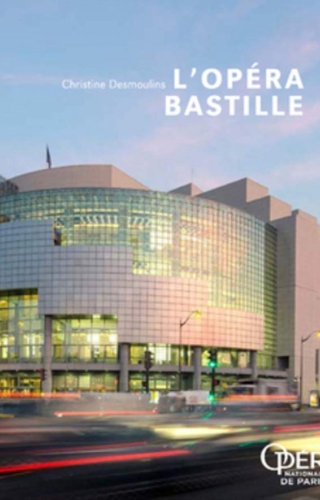
Corn (Mais) Bastille, it is much more than a memory of revolt. It is a district in perpetual reinvention, where the Opera Bastille, internationally renowned scene, shines a contemporary and daring lyrical creation in a setting of glass and metal.
At his feet, a total change of scenery: the basin of theArsenal, which connects the Seine at the Canal Saint-Martin, deploys its moored barges and tree-lined quays for a green break or a quiet aperitif with your feet (almost) in the water. And if you like to get lost, the cobbled courtyards and hidden alleys which wind around the neighboring suburb silently tell the past craftsman and worker of the neighborhood. While the rue de Lappe, joyful and popular, prolongs the festive spirit of Bastille until the end of the night. Finally, for those with a sweet tooth, head to the market of the Bastille, one of the most generous in Paris, a true sensory journey between fresh produce, singing accents and colors of the world.
Bastille, it is Paris in all its richness : historic, creative, exotic, festive and gourmet. Follow me to this revolutionary neighborhood!
After our walk, you will find my hotel recommendations, de restaurants anddrunk and toute end of article.
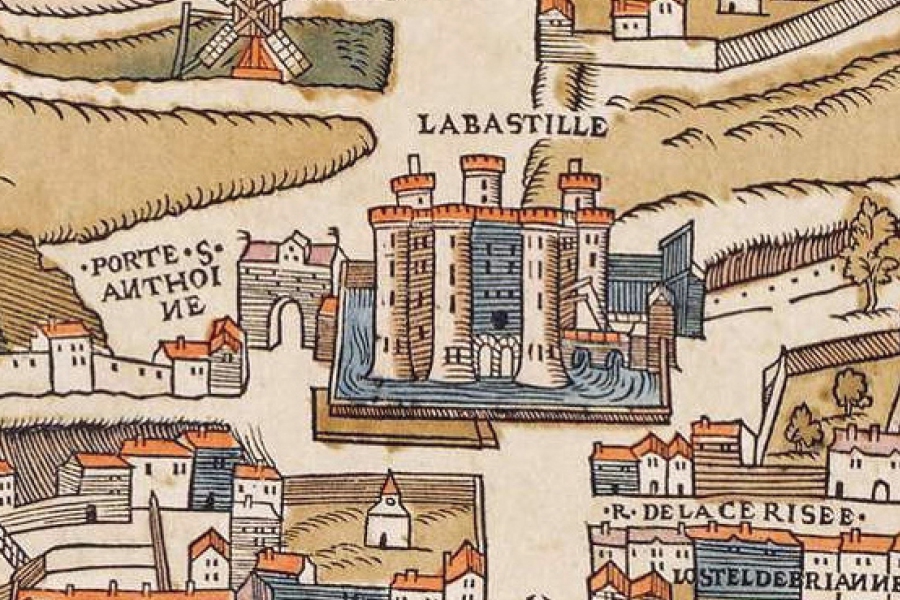


The prison of the Bastille, from despotism to freedom
La Bastille embodies the shift between despotism and freedomBuilt in the 14th century under the reign of Charles V to defend the east of the city against the English, this imposing fortress quickly became a state prison, synonymous with royal arbitrariness. We entered without judgment, often for simply talking too much, writing too much, or thinking too much. Bastille, “prison of thought”, thus becomes the hated symbol of censorship and absolute power, a place where free spirits were silencedThe Marquis Donatien de Sade, for example, was locked up there for more than five years, in the misnamed "Freedom Tower", before being transferred just ten days before the taking of the Bastille by 600 rioters, July 4, 1789. Voltaire spent 15 months in the fortress during two stays. Conversely, Montaigne spent only one day there in 1588, proof that even the most moderate could taste the humiliation of confinement. As for the enigmatic " Man in the Iron Mask », and the whimsical Count Cagliostrio, they remain among the most mysterious prisoners in the history of France...
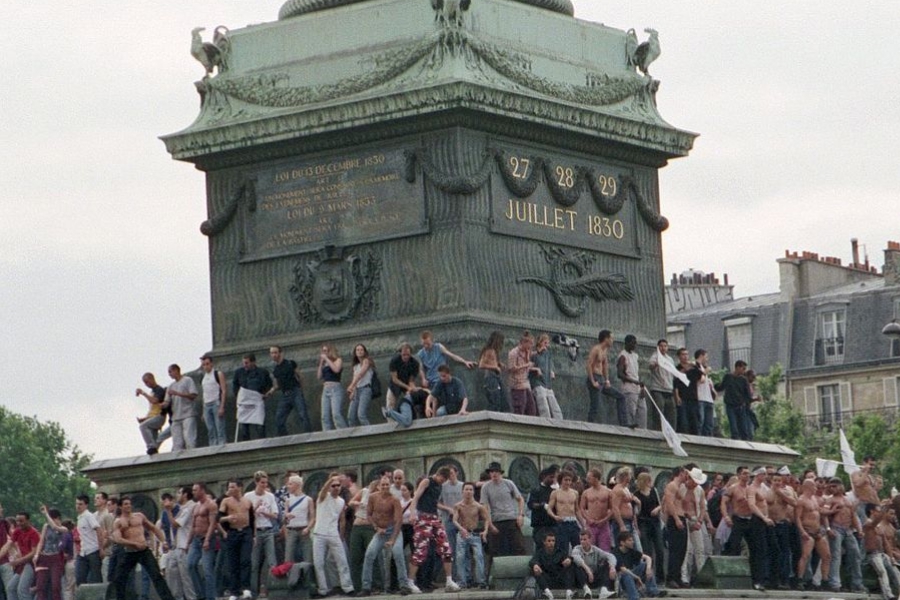
Today, irony full of meaning, It is in this same square that we gather to express ourselves and make demands : major causes meet there, from citizen demonstrations to marches for human rights. The former prison has become a space of openness and discussion, where people loudly demand what was once whispered behind bars...
Not far from the square, at 8 rue Saint-Antoine, a statue pays homage to the philosopher, playwright, writer (and spy!) Beaumarchais, whose tirades against royal censorship still resonate: “ Without the freedom to blame, there is no flattering praise. "He too was monitored, censored, and his theater banned before triumphing: a perfect symbol of the fight for freedom of expression. On July 14, 1789, from the terrace of his sumptuous villa (formerly located at the start of the current boulevard Richard Lenoir, opposite the private mansion of Sagonne built in the 17th century by the architect of the “Sun King” at the current 23 bd Beaumarchais ), the writer witnesses the taking of the Bastille...
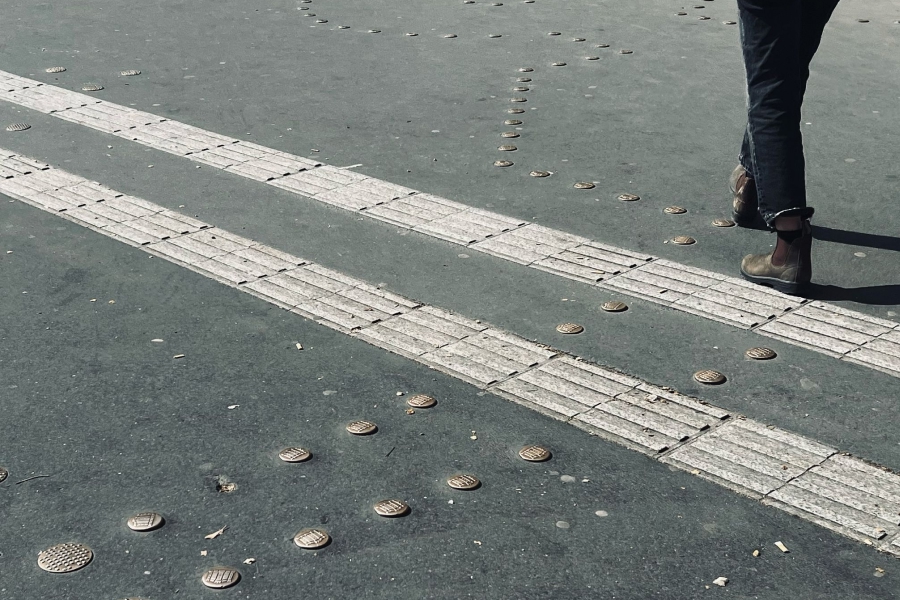
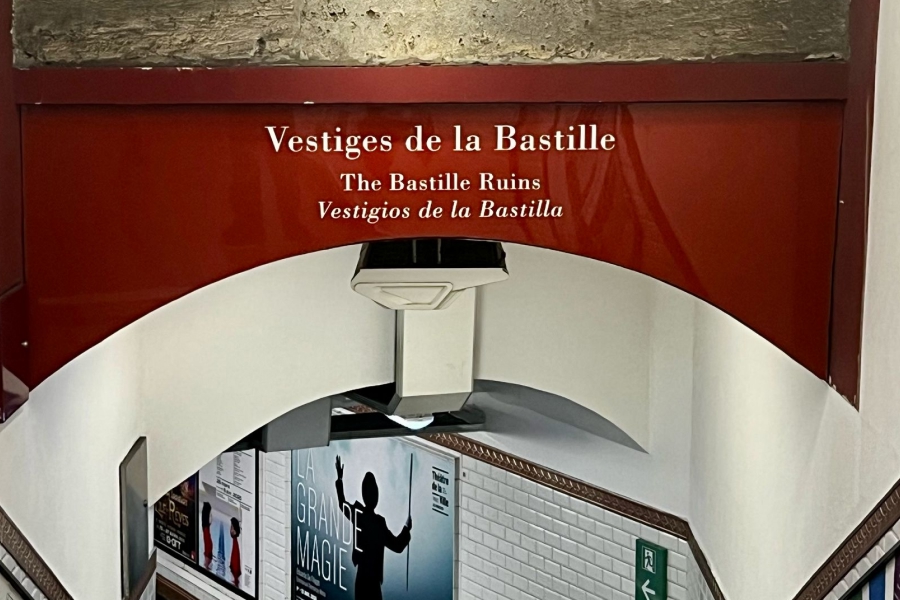


The stones of the Bastille...
After its demolition began on July 15, 1789, the stones of the Bastille were dispersed and sold in the form of the most diverse objects: models, keys, inkwells, jewelry... Some were used to build the bridge of the Concorde, which today connects the National Assembly. A highly symbolic reversal: the stones of absolutism reused to access the very place of democratic debate from the place where Louis XVI was beheaded… Today, opposite the Bank of France overlooking the Faubourg Saint-Antoine, the ground of the square of the Bastille is marked with markers and paving stones demarcating the location of the sinister fortress.
In 1899, during the excavation of metro line 1, workers uncovered the foundations of the Freedom Tower – the one where the “divine marquis” was notably detained de SadeThey were dismantled stone by stone, then repositioned in the Henri-Galli Square, a stone's throw from theArsenal. And if you take the metro line 5 à Bastille, towards Bobigny, keep your eyes peeled: on the platform, a piece of the counterscarp wall is still there, discreet but very real. You can even see the other side behind a window in the corridors, near the entrance to the boulevard Bourdon.
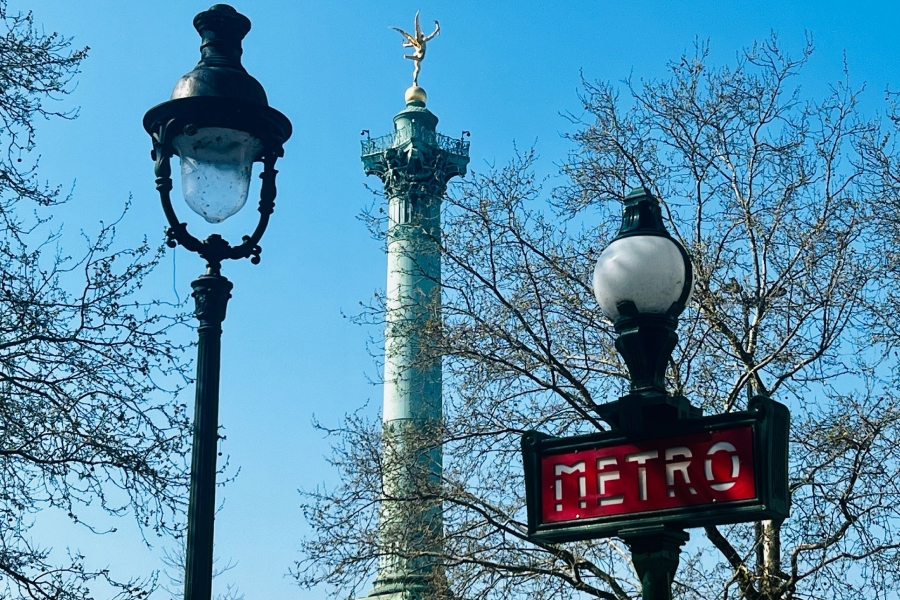

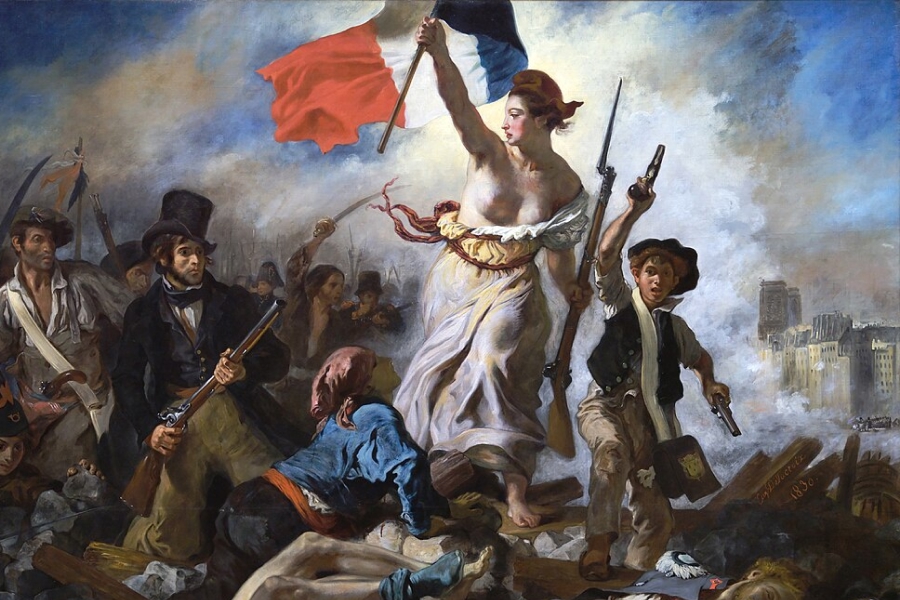

La Colonne de Juillet : the memory of the French revolutions
Impossible to miss: the Colonne de Juillet rushes to the center of the square of the Bastille, on the very spot where the famous prison was demolished. This 180-ton bronze monument pays homage not to 1789… but to another insurrection: that of the “ Trois Glorieuses » from July 1830Three days of raised paving stones, barricades and fighting, which led to the fall of the king. Charles X. Under the column, a burial crypt houses the 504 bodies of revolutionaries, buried there for " to have armed themselves for the defense of public freedoms " Their names are engraved and covered with gold leaf on the column. But the story doesn't end there: In February 1848, Paris rose up again, this time against Louis-Philippe, the “citizen king” who himself had once erected the column! He was forced to flee, and his throne, seized at the Palace of Tuileries, is transported to the place of the Bastille…where he is burned at the foot of the column, in a striking symbolic gesture. The 2nd République then decides that 196 other bodies of the dead of this new Revolution will join the column in a second dedicated sarcophagus.
Speaking of République, did you know that the soldiers of the cavalry regiment of the Garde Républicaine are housed close to the Bastille ? Exactly in the Célestins barracks located on the boulevard Henri IV in the district ofArsenal ! It is today the largest mounted formation in the world. Perhaps you will come across these magnificent horses and soldiers in the rues du Marais...
The column overlooks the Canal Saint-Martin which passes just below the square of the Bastille. From a discreet gate during your visit, you might see a barge passing by... A detail that adds to the secret charm of the place and its share of shadow. Because the column also hides its legends, starting with that of the famous elephant of Bastille : a grandiose project of Napoleon I, who dreamed of erecting here a monumental fountain in the shape of a giant pachyderm, 24 meters high. Only the temporary plaster structure was built - it remained abandoned for years. Victor Hugo made it a shelter for Gavroche In " Les Misérables »The foundations of this fountain, whose water must have come from the canal, are today the base of the red marble column decorated with medallions and lion heads...
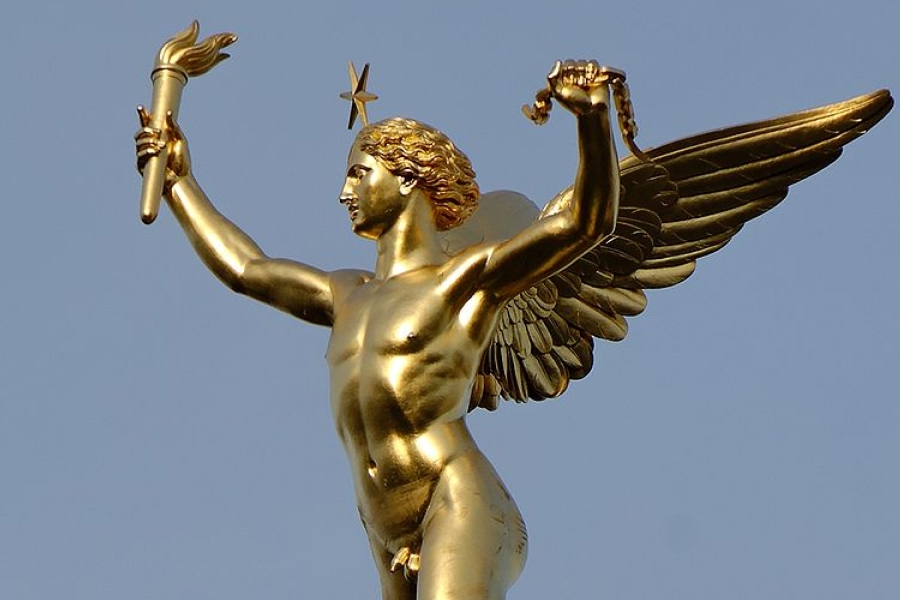

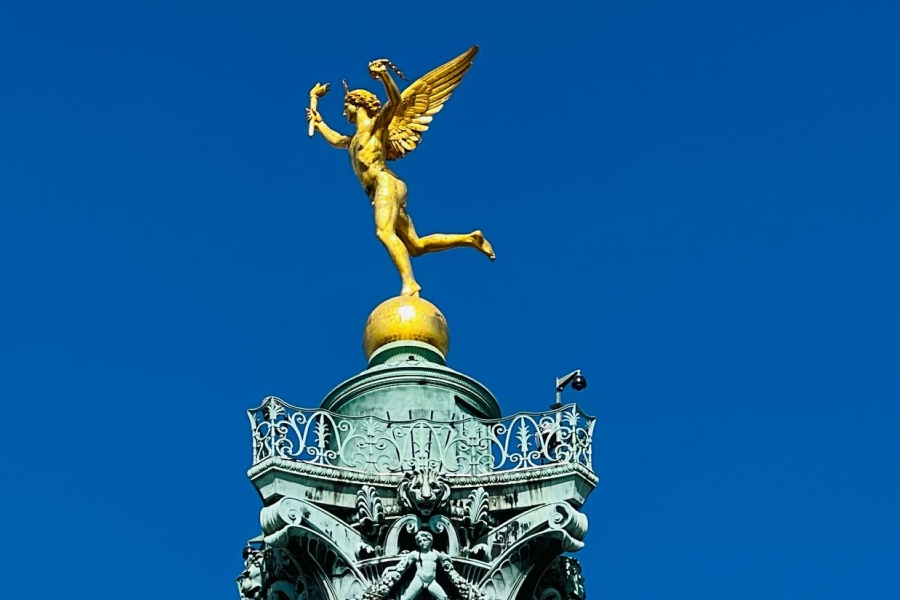
Egyptian mummies and good Genie…
But the most disturbing - and undoubtedly the most romantic - of the stories linked to the Colonne de Juillet is that of mummies. Before the revolutionaries of 1830 could be properly honored, their bodies were thrown into a common grave, without ceremony. And they were not alone. Six mummies (of which they say the high priest Pentamenou!) brought back from Egypt by Napoleon's scientists and Directoire, stored for a time in the reserves of the Louvre, had ended up rot in place, forgotten, then they too buried in this same pit, like common historical rejects. When, years later, it was decided to offer a decent burial to the heroes of Trois Glorieuses, we exhume this grave... and, with the revolutionaries, we also move what remains of the mummies. Impossible to sort them. And so, without wanting to, we bury a little bit of ancient Egypt under the Bastille. This, almost at the location of the ephemeral Fountain of Isis (known as the “Regeneration”) built by the revolutionaries of 1793. The rumor was quick to spread: a pharaoh under the Bastille ? It didn't take much more to ignite imaginations... A urban legend was born. It still makes historians smile., but admit that it adds a lot of relief to our walk...
At the summit finally, at 52 meters high, shines the Genius of Liberty, sculpted naked as a green by Auguste Dumont above four boys also in Adam's attire and protected by lion muzzles. This winged character, decorated with gold leaf, brandishes the torch of civilization and holds in his left hand broken chains. An allegory of freedom conquered, it is sometimes interpreted as a figure of Lucifer - in the original sense of the term: the bearer of light, free from constraints. A strong symbol, born in a time of ruptures and hopes. On the floor of the column are a string of swastikas (sun wheels) as well as compass roses indicating the cardinal points towards which blow "to the four winds" and for all Humanity, the spirit of this Genius of Liberty, this protective angel of the freedoms of the Marais and besides! Around this axial column, thirteen paths full of history radiate around the square of the Bastille. A lucky number…
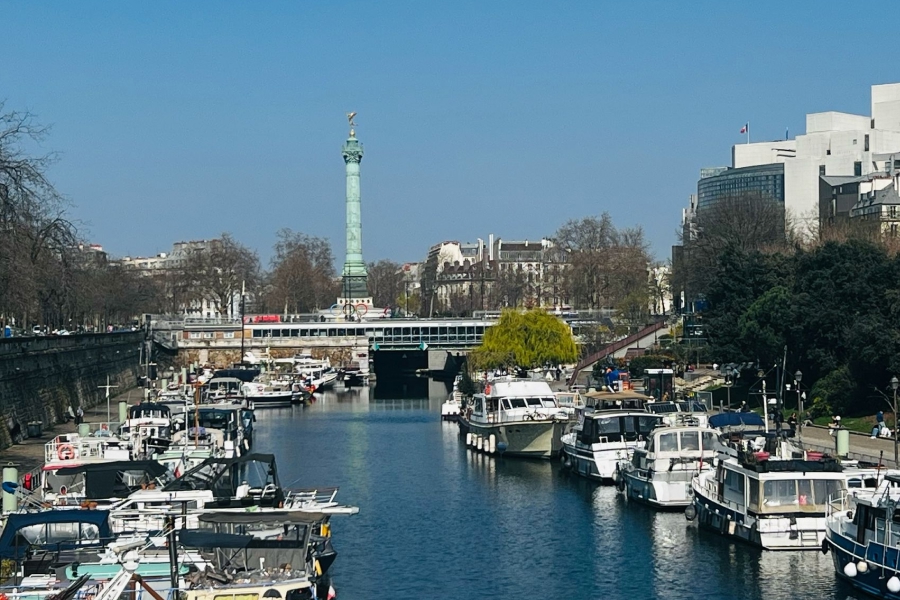


The Basin of theArsenal : the sweet stopover…
A stone's throw from the hustle and bustle of Place de la Bastille nestles an exotic break : the basin of theArsenal dug in 1805 on the site of the ditches of the Charles V enclosure, in the extension of the Canal Saint Martin which passes under the Place de la Bastille. Here, the sounds of the city fade away, replaced by the lapping of boats and the discreet song of birds. Since 1983, this basin — once dedicated to goods — has been transformed into a small marina welcoming nearly 200 boats sometimes joining the Seine neighbor via the so poetic lock of theArsenal. Along its banks flourish rose gardens, pergolas covered with honeysuckle and clematis, lawns for stretching out, the terrace of the " Grand Bleu » for lunch by the water, play areas for children, not forgetting an almost southern atmosphere when the sun is out.
One detail deserves the attention of informed walkers: the central footbridge bears the name of Jim Morrison. Yes, the legendary singer of the Doors., whose last home was an apartment at 17 rue Beautreillis nearby! A rock, poetic and unexpected nod, in the shadow of the barges.
And for those who dream of sailing, Canauxrama offers departures from the port of Bastille some cruises on the Parisian canals — a journey through Paris through its inland waterways, between locks, tunnels, swing bridges and urban secrets. So romantic!
Last advice, if you are on the metro line 1, please note that the station Bastille is (for me) one of the most beautiful in Paris: on the quayside towards the Château de Vincennes, a charming view of the port is revealed – towards La Défense, a fresco unfolds the great revolutionary episodes!
The Memorial to the Homosexual Victims
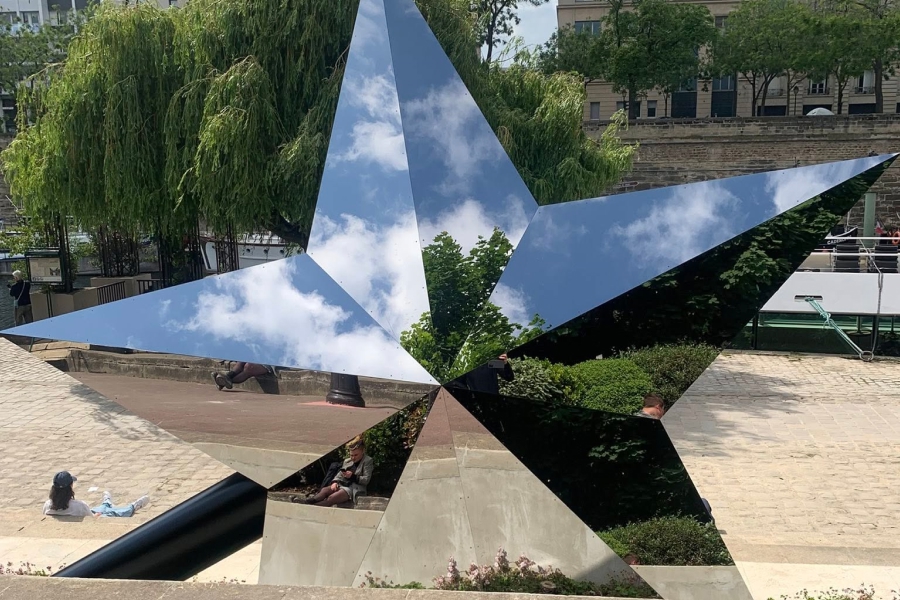
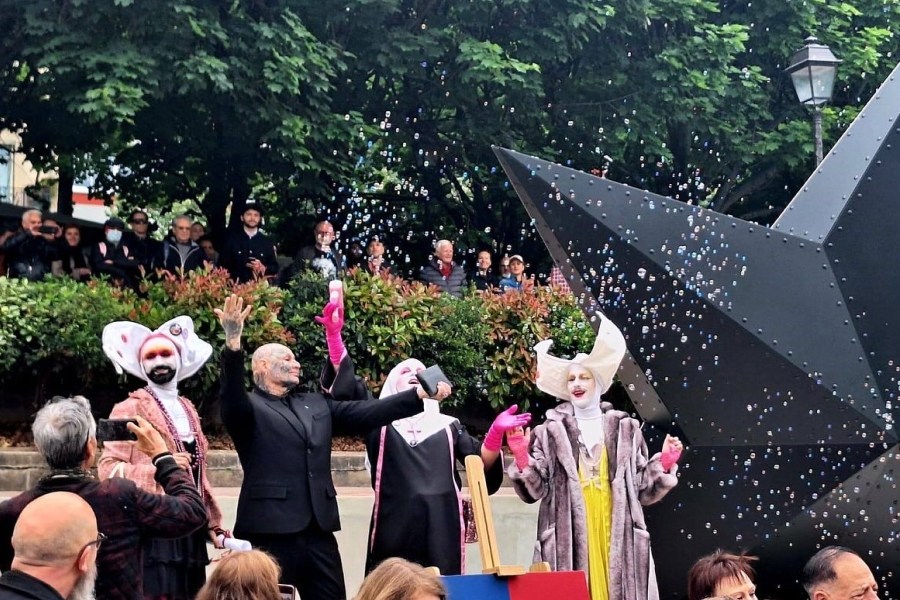
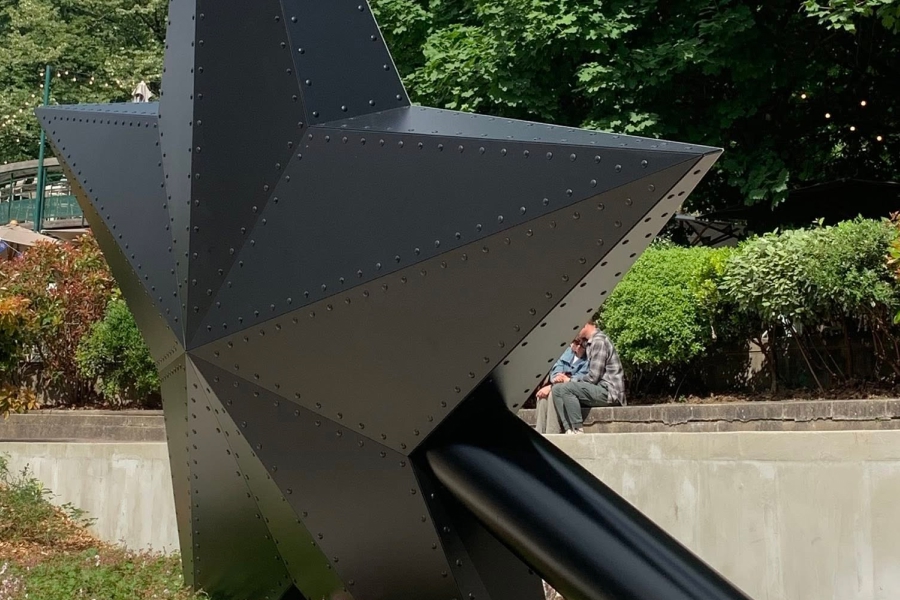
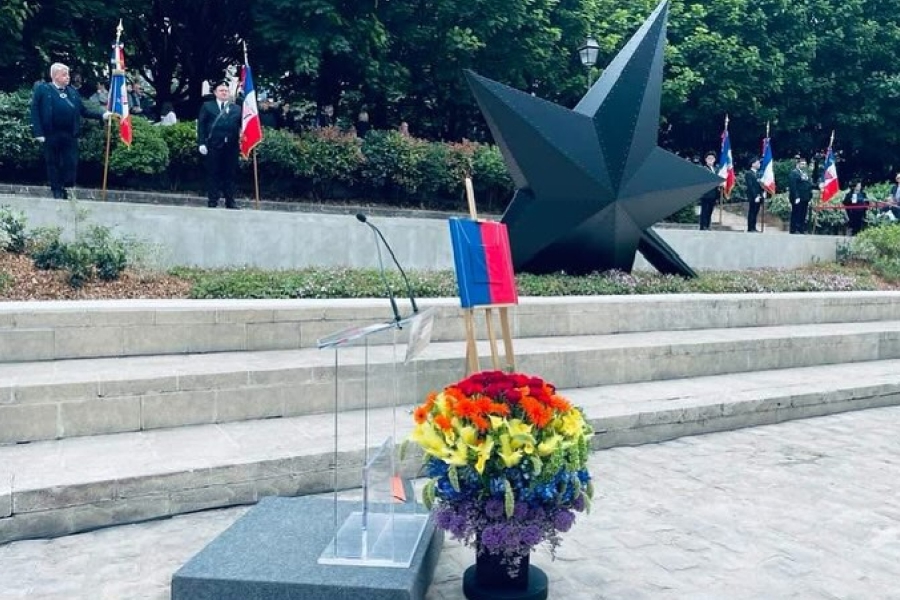
Since May 2025, the Port-de-l' gardenArsenal houses a memorial of great symbolic significance. Inaugurated on the occasion of the International Day Against Homophobia, Transphobia and Biphobia, the monument To the forgotten!, designed by the artist Jean-Luc Verna, pays homage to the homosexual victims of deportation and, more broadly, to LGBTQIA+ people persecuted throughout history.
This striking 3-ton steel work—a monumental magic wand—blends mythology, pop culture, and politically engaged poetry. Here's what the artist says: The dark side of the star is the bodies that were burned, it is mourning, it is also a shadow that tells us that things can happen again. And the other side, the mirror, is the present, with the colors of time passing and the Parisian sky changing as quickly as public opinion can turn.».
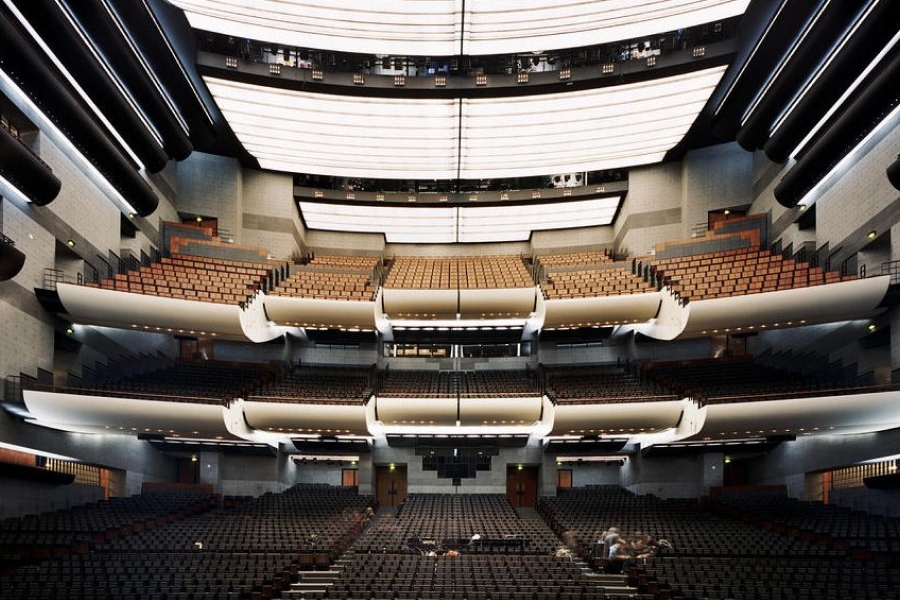
Opera Bastille, the pinnacle of lyrical art
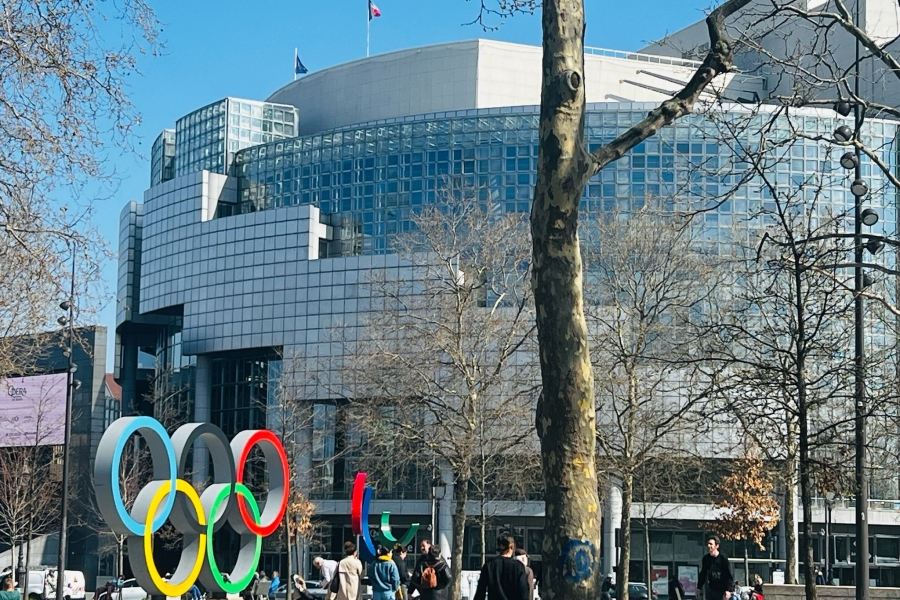
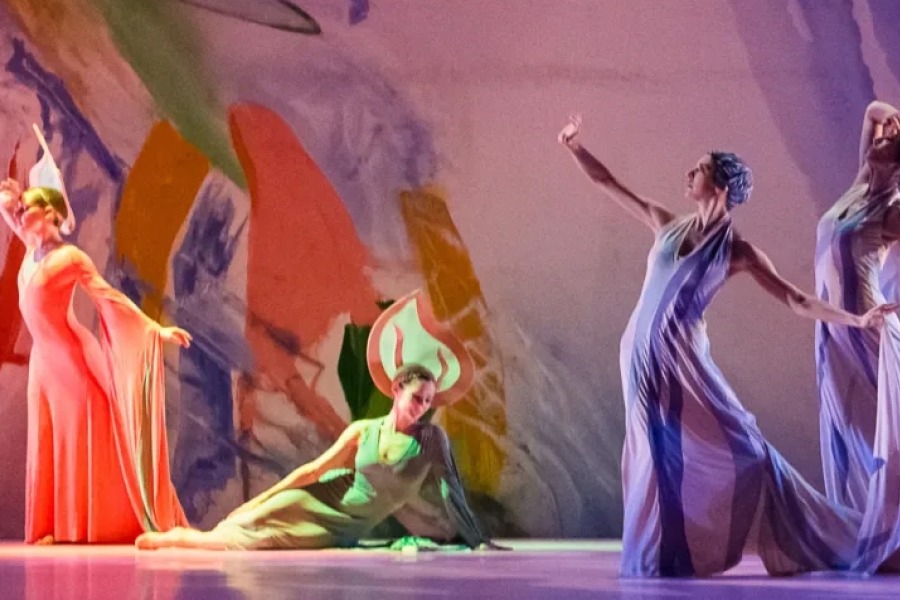
If you are looking to live a exceptional Parisian evening, the Opera Bastille is a safe betThe dazzling modernity of its architecture and the magic of its lyrical productions should dazzle you. The project for its construction on the site of a former railway station dates back to 1983, under the impetus of the president of the République François Mitterrand and on the proposal of his then Minister of Culture: Jack Lang, a " Maraisien » that you might still come across today in the streets and on the terraces of the neighborhood. Say hello to him from Julien Dumarais ! The selected project, designed by the architect Carlos Oct, aimed to create an accessible, open space, in step with the times. Inaugurated on July 13, 1989 with the work "The Night Before the Day" by Bob Wilson in front of 32 heads of state for celebrate the bicentenary of the French Revolution, the Opera Bastille is a true architectural feat. With its 2745 seats, all with a view and exceptional acoustics, it is the largest opera house in Europe ! I'll tell you more here in an article I wrote specifically about this magical place.
For a successful evening, remember to book your tickets in advance, especially for the most popular shows. Personally, I go through Music & Opera, a specialist who has often saved me frustration by finding me places even when Bastille was sold out. Arrive early to enjoy the atmosphere unique place and perhaps enjoy a glass of Champagne before the show begins.
Note:
- The opera offers guided tours (in French) of the backstage and stage areas – see this link
- in the opera building at 110, rue de Lyon: the Grand Palais Immersif has been a cultural space dedicated to immersive exhibitions that merge art and technology to offer new experiences to the public. It's quite amazing!
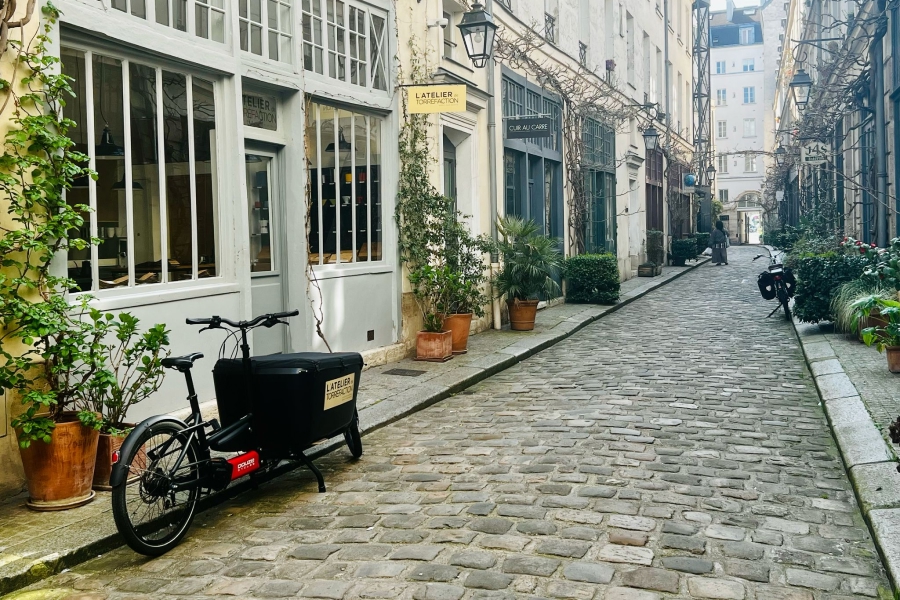
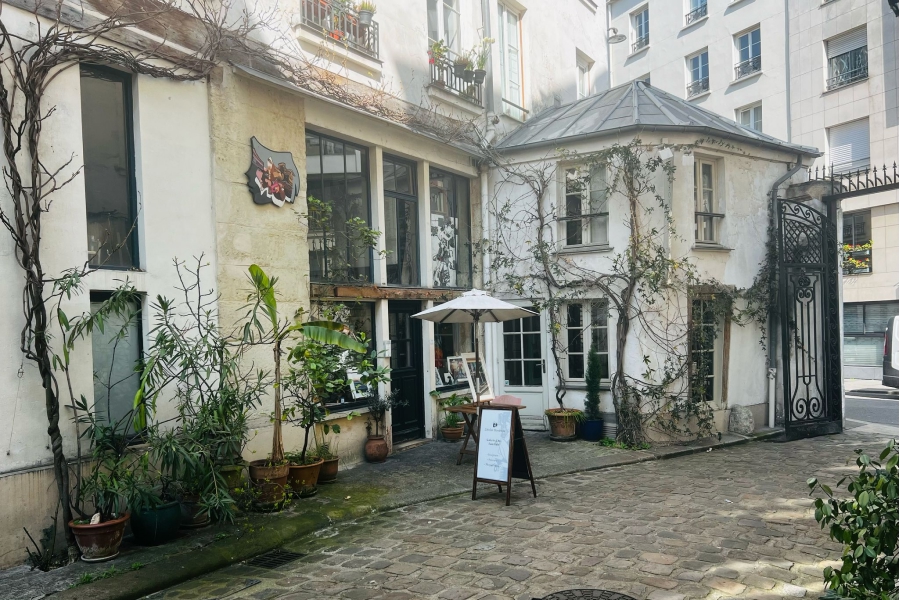
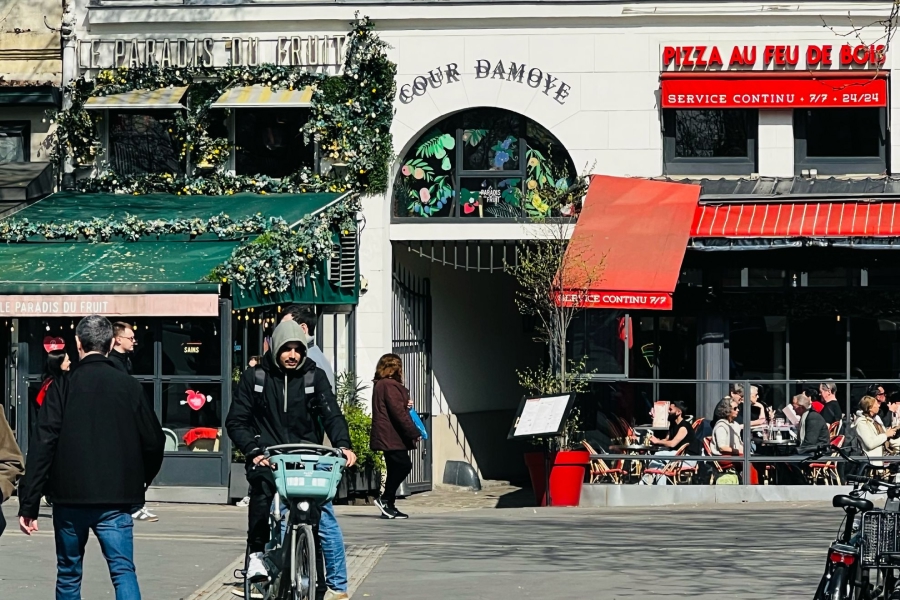
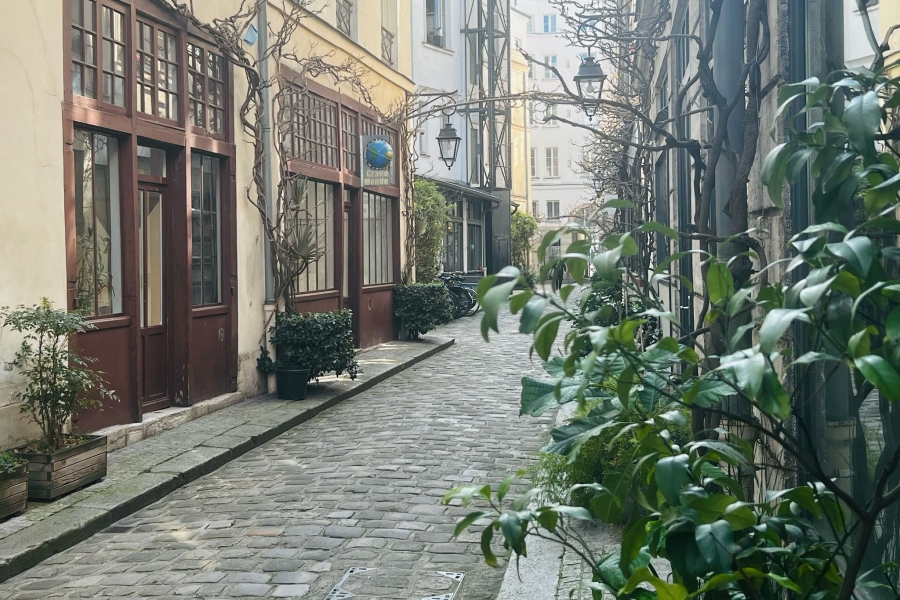
The hidden courtyards of Bastille
You have continued reading this article so far… Out of curiosity, So you deserve that I reveal two secrets to you well-kept. Two discreet addresses, almost invisible to the hurried eye, yet full of charm and history.
Hidden behind a discreet gate at 12 place of the Bastille (or 12 rue Daval), the Damoye courtyard is a gem that takes its name from a hardware store from the Age of Enlightenment. Upon entering, you're transported to another era in a fraction of a second: worn paving stones, modest facades, discreet workshops and captivating calm. Formerly dedicated to crafts and small businesses, the courtyard housed woodturning, engraver and printer workshops and a old freight elevator The renovated space still gives the place an industrial feel. Today, graphic designers, architects, coffee roasters, photographers, and pop-up concept stores have set up shop there. The place has retained its soul, that of the Saint-Antoine suburb, once a mecca of artistic crafts… as well as popular insurrections. A rare impression of being in town without being there, between ivy, beams and silence…
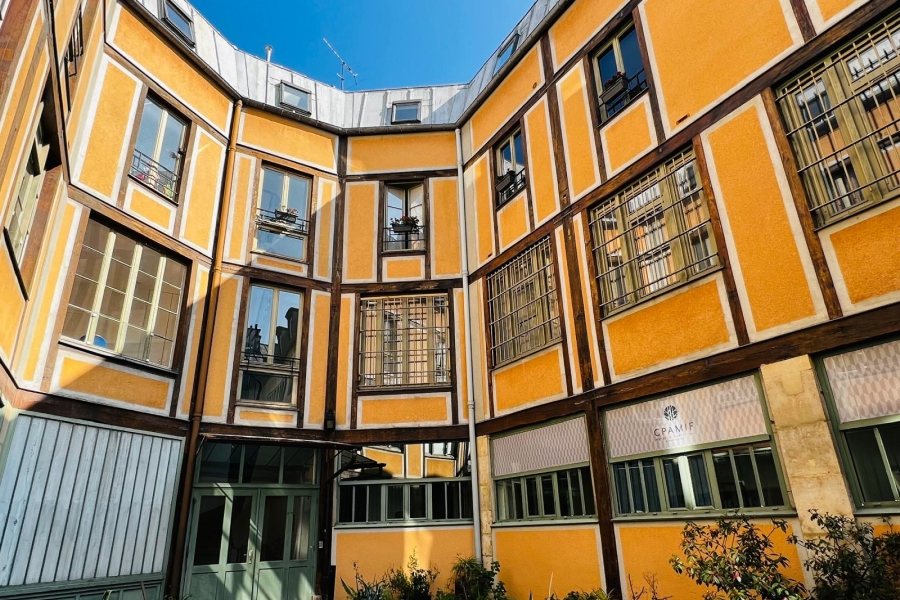


A few steps away, at the corner of Café Milou, at 2 rue de Faubourg Saint-Antoine, a large carriage entrance gives access to the passage of Cheval-BlancThis dead end, opened in 1824, presents a concentration of working-class history: six successive courses (named after the first months of the year), old stables, converted half-timbered workshops, industrial glasshouses... You can still feel 19th-century Paris there, the Paris that worked in a gray coat, between wood, leather and metal. The name “ Cheval-Blanc » comes from an inn where the horses of travelers arriving from the provinces were lodged. The building has evolved, but the active hive atmosphere remains there : creators, startups, cruise passengers meet there today, between tradition and renewal.



Street Lappe, where Paris still dances
Are you still there? Curious, loyal, attentive... perfect! After the hidden corners and quiet docks, I offer you another side of Bastille : more noisy, more colorful, more nocturnal. Welcome to the rue de Lappe, the festive artery par excellence, where the popular history of Paris continues to vibrate beneath the cobblestones. Nestled between the rue de la Roquette and the one at Charonne, the rue de Lappe has never been afraid of noise or movement. Originally, it was a street of artisans and workers - scrap metal dealers, cabinetmakers, small businesses - where the Bretons and Auvergnats who came to Paris quickly settled in in the 19th century. They opened charcoal cafés, simple places where people could warm up, eat a bite... and dance among the ordinary working class, but also prostitutes and "apaches", thugs and crooks of all kinds. Because very quickly, music was invited, and with it, a small, typically Parisian miracle: the musette ball!
Here, the accordion becomes king, the bourrée rubs shoulders with the waltz, and the java becomes an art of living. In the 1930s, the rue de Lappe counts up to 17 balls! The most famous? The Balajo, of course, founded in 1936 by Jo France, a former wrestler who became king of the nights. Mistinguett was then the godmother of the place. You can still go there guincher rock, salsa or retro dance, between art deco gilding and so many souvenirs hanging on the walls...
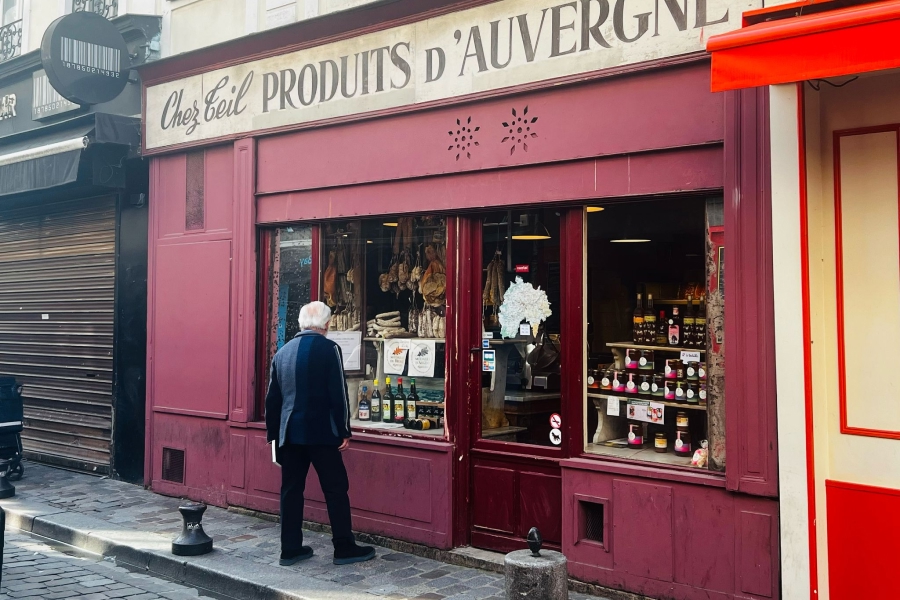
But lovers of silence should not flee too quickly: the rue de Lappe also has charm even in broad daylight. Behind the lively storefronts, some traces of the past persist: old signs, stones marked by time, a atmosphere that mixes the popular with the bohemian. For my part, I will look for my cheeses and cured meats from Auvergne at 6 of this street. For my meals with friends, I have my habits " Chez Paul » at the end of the street, the entrance being at 13 rue de Charonne.
Even today, we come to Bastille to party, between tapas bars, electro clubs, small, unpretentious restaurants and iconic places. . There rue de Lappe has changed, of course. But the spirit is still there: a street where Paris never really falls asleep, and where people still dance and drink, sometimes for no reason.


Market Bastille : the gourmet effervescence
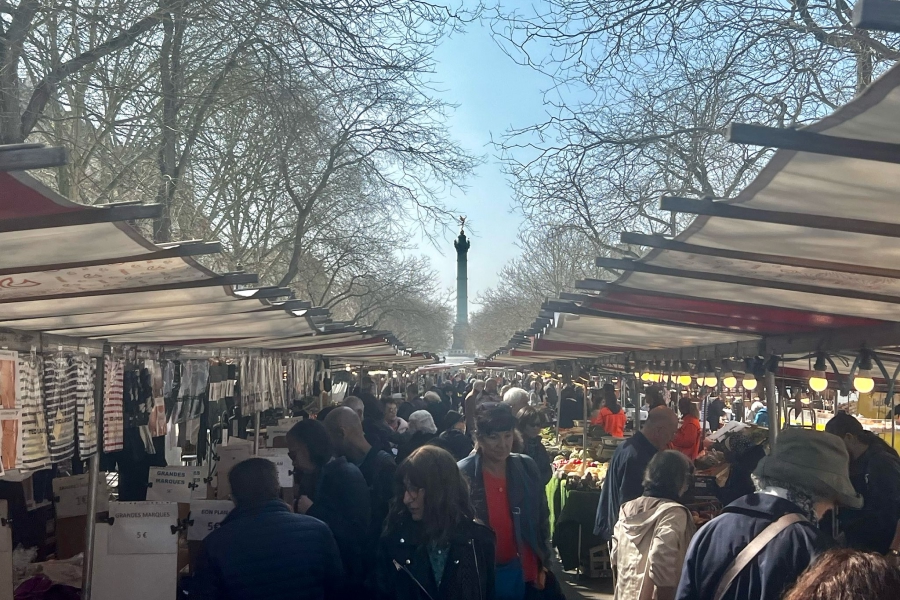
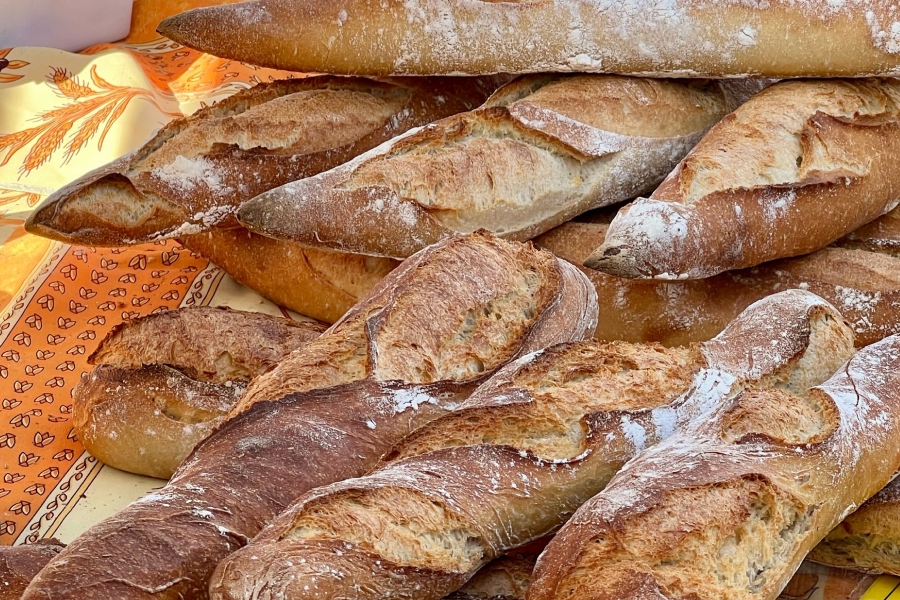
Now, let's head to the Market Bastille, a must-see for lovers of open-air markets… and slightly chaotic gourmet adventures! Imagine a a string of colorful stands stretching proudly along Boulevard Richard Lenoir, under the benevolent eye of the July Column. This market, which covers the waters of the Saint-Martin Canal running underground, is a real living scene where Paris reveals itself in all its exuberance. Here, every Thursday and Sunday, it's a festival for the senses – and sometimes for the ears, thanks to the shopkeepers who don't mince their words.
Between the local vegetables that seem to have come straight out of a watercolor, the cheeses that would make a refiner pale, and the still-warm crusty breads, there is enough to fill your basket (and incidentally empty your wallet). And then there are those little extras: stylish clothes, handcrafted jewelry, and even improbable trinkets that seem to whisper " Take me Home ". Let yourself be charmed by the song of the fishmongers or the chatter of customers debating the best way to cook a monkfish. I love coming early to enjoy oysters washed down with a glass of white wine for breakfast (yes, it's my Sunday ritual), but be aware that if you arrive a little before closing time, you might well leave with a handful of fruit or flowers at a knockdown price. A word to the wise...

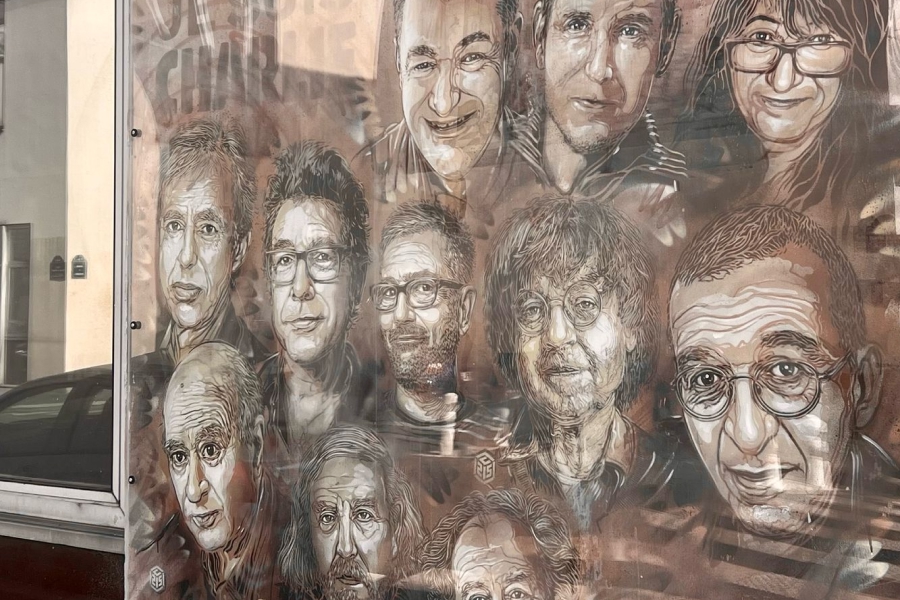


Leaving the market Bastille, I invite you to go up rue Richard-Lenoir and turn off towards rue Nicolas-Appert. There you will find, at number 10 of the " place of freedom of expression" , THE former editorial offices of Charlie Hebdo. Opposite the theater Comédie Bastille, in this unassuming little street, one of the most significant tragedies of our contemporary era took place. 7th January 2015, in the middle of an editorial conference, two armed men entered the offices of Charlie Hebdo and opened fire, killing 12 people — cartoonists, journalists, police officers. Their “crime”? To have dared to draw, to laugh, to criticize. To be free, in short.Like so many others before them in this neighborhood, they too fought with words, images, and humor to make the powers that be tremble. On the walls, frescoes now pay tribute to the victims. Poignant, sober, tender, biting. The names are inscribed there like one sculpting an invisible column: Cabu, Wolinski, Charb, Tignous, Honoré, Maris, Renaud, Ourrad, Caya, Brinsolaro, Boisseau, Fieschi…
This place is modest, but full of meaning. Take a moment to stop here. Not to look. To think. To remember.
In this same neighborhood, Another huge tragedy occurred on November 13, 2015. A few hundred meters from Charlie Hebdo, the Islamist madness attacks the spectators of the Bataclan and customers of the surrounding terraces. 132 people lost their lives, 413 others were left permanently injured.
But the strength to fight for one's ideas and freedoms remains intact. Fluctuations in the name of mercy » is the motto of Paris: " He is beaten by the waves, but does not sink"! This is the spirit of Paris and the neighborhood Bastille.

Sleeping at the Bastille !
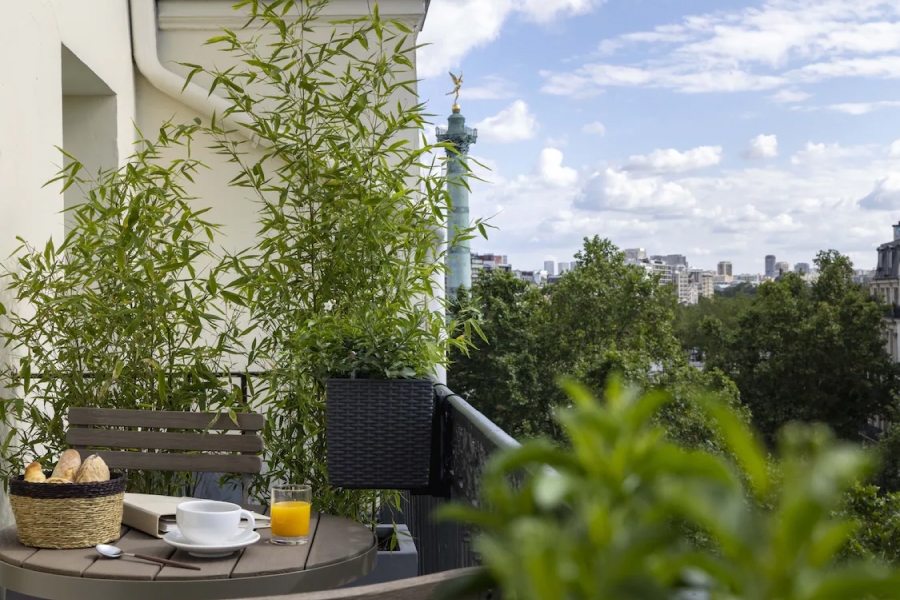
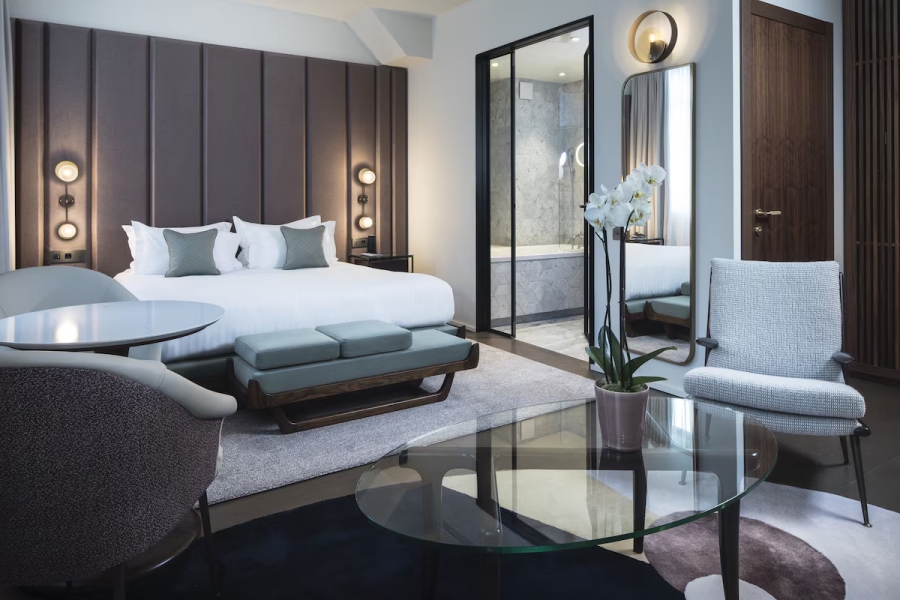
Listed Bastille, the hotel industry is beautiful, here, make your choice !
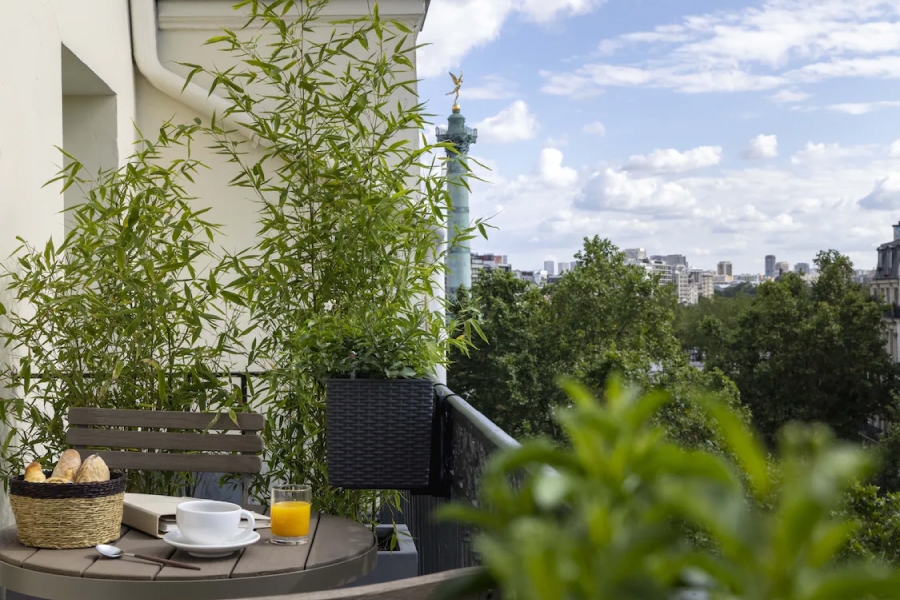
If you want give yourself a luxury treat, I particularly recommend you " Le Petit Beaumarchais » (a stone's throw from the Opera and the Place de la Bastille with a wonderful spa, wellness area), the " Maison Breguet » (enjoy its delicious restaurant and spa), the « Goralska Résidence hotel » (the best view of the basin of theArsenal) or even the new one SO/ Paris Hotel in the Arsenal district with an absolutely spectacular view of all of Paris!
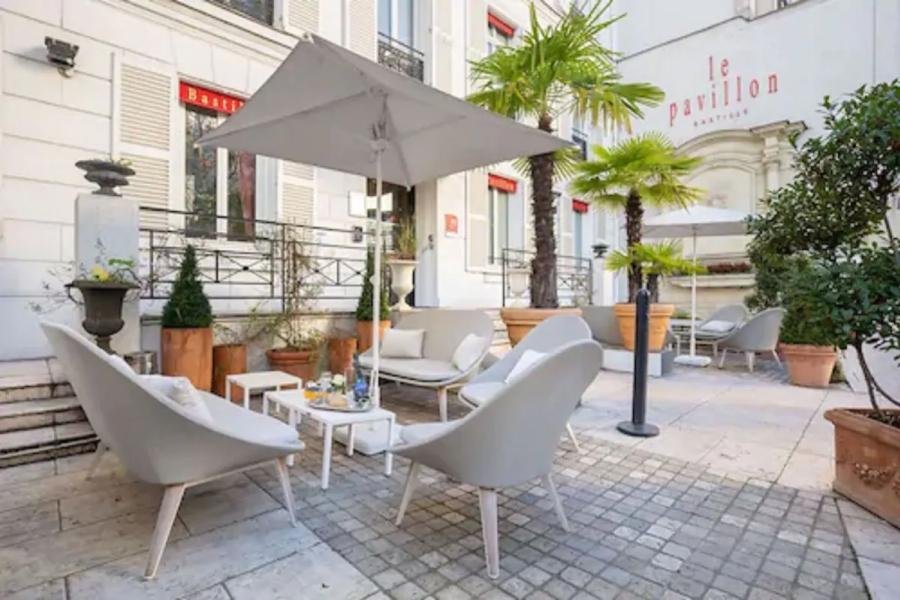
For softer budgets, I especially recommend the “ Oh La La! Hotel Bar » well located on rue de la Roquette, as well as the " Pavilion Hotel Bastille » which faces the Opera, the Bastille Spéria or " The Golden Harrow » on Saint-Antoine Street, theIbis Paris Bastille or Moxy close to the market.
Don't delay in booking!
Note that the Bastille is very close to the Place des Vosges which includes incredible hotel gems such as the “ Pavillon de la Reine & Spa« ou the hotel Cour des Vosges-Evok Collection » (read about this in my selection in this article)


Something to eat and drink!
To the Bastille, there really is “something to eat and drink”…
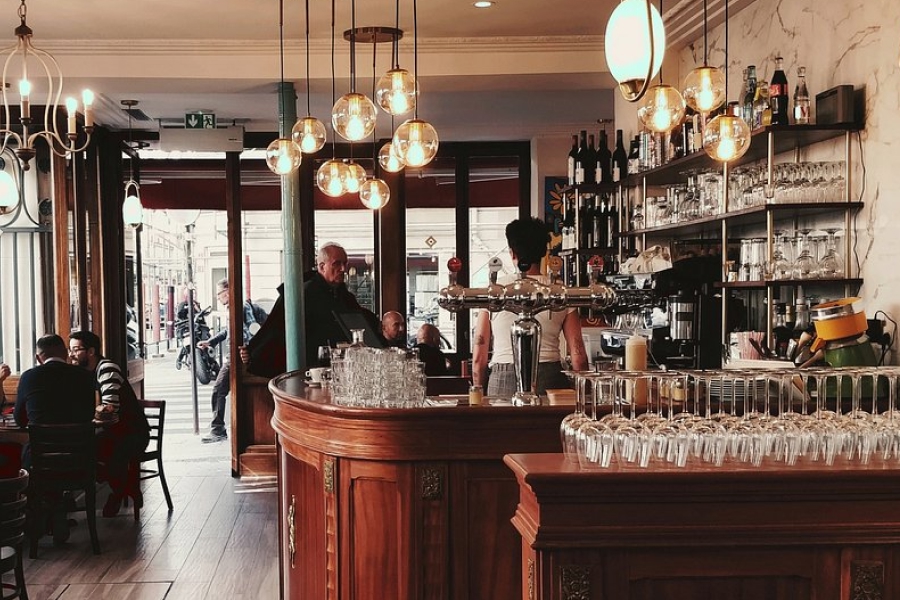
The terraces overlooking the square Bastille seem to have launched into the competition of the highest prices and the sometimes limited quality of service... I only recommend those that I usually go to: the café des Phares (nice, effective for aperitifs and known for having been the first philosophy café in France in 1992) and the café français (Art Deco style, more chic, more expensive too). On the other side of the square, I won't risk recommending any addresses... Also, from the terrace of 10 rue Saint-Antoine, the Antoine's bistro offers you a view of the statue of Beaumarchais, the Protestant temple, the July Column and the Opera Bastille in the distance.
On the tradition side, the Alsatian brewery Bofinger proclaims to offer " the best sauerkraut in Paris ". Pretentious, you know! Opinions are indeed divided, as are those on the other dishes and the quality of the service, but the historic decor has been exceptional since 1864. For my part, I prefer the timeless charm of its neighbor across the street located at 6 rue Bastille : the Grande Brasserie. If you prefer Italian cuisine, take a few steps to number 2 of this same street atAuberge de Venise.
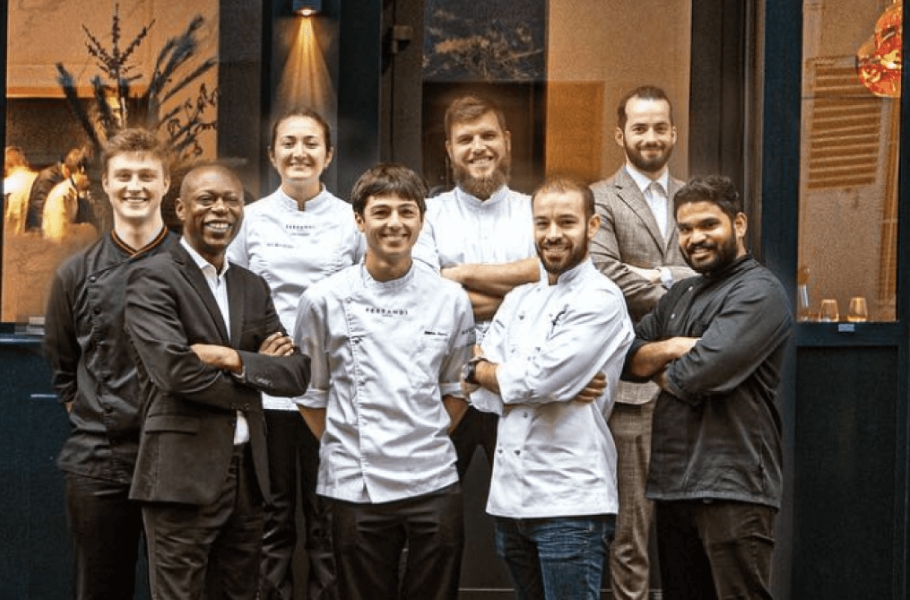
Nearby, Tournelles Street, there are a host of other nice restaurants including a great Lebanese oneReserved located at number 10, the Flavors of Antica (couscous and tagines!) at 14, the Bistrot de l’Oulette at 38 or even Angel 20 located at 44 in the immediate vicinity of Place des Vosges. The Restaurant H is also the only Michelin star in the area Bastille, at 13 rue Jean Beausire – treat yourself!
Finally, my ultimate tips for a great French food at a very reasonable price : go on then " Chez Pradel » at 3 rue du Pasteur Wagner or even « Chez Paul " at the end of the rue de Lappe, it's traditional, warm and good.
Cheers and enjoy your meal!
© Julien Dumarais My Marais Paris